
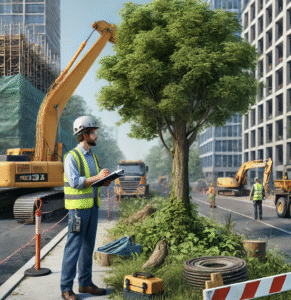
In the world of construction, the challenges faced on-site are rarely limited to structural, mechanical, or geotechnical matters. Sometimes the seemingly quiet, steadfast trees become central to disputes, bringing in issues of damage, responsibility, safety, and regulation. When litigation or arbitration is a possibility, engaging a Tree Expert Witness (often an arborist or consulting tree professional) can be a strategic necessity. In this article, we explore the compelling reasons why a construction company may need the services of a Tree Expert Witness, how they contribute in disputes, and what to look for when retaining one.
The Intersection of Construction and Trees
Modern construction projects often intersect with natural settings: sites may have mature trees, landscaped areas, protected species, or tree conservation laws to consider. Trees might be impacted by excavation, grading, root severance, soil compaction, canopy trimming or removal, or changes to drainage patterns. A construction company that fails to anticipate the risks posed by trees—or the legal obligations tied to them—may find itself embroiled in disputes with neighbors, municipalities, or claimants.
Because trees are living, dynamic systems, assessing their health, structural integrity, or cause of failure requires specialized botanical, biological, and mechanical insight. Laypeople (including most contractors or engineers) are rarely qualified to opine on these complexities with credibility in a courtroom. That is where a Tree Expert Witness becomes indispensable.
Why a Construction Company Needs a Tree Expert Witness
Clarifying Causation and Responsibility
One of the central contested issues in many tree-related disputes is what caused the damage or failure—and who is responsible. Did root damage from nearby excavation lead to the destabilization of a tree? Did construction vibration or heavy equipment compaction weaken structural roots? Did altered water runoff after grading cause root decay or stress?
A Tree Expert Witness can perform detailed forensic assessments—examining root-soil interfaces, tree anatomy, prior health, stress patterns, and site disturbance history—and offer a reasoned, evidence-based opinion on causation. In legal settings, courts often require expert testimony when technical or scientific issues are at play, because judges and juries are not expected to intuit these details themselves.
Quantifying Tree Damage or Loss
If trees have been injured, damaged, or destroyed, determining their value is another technical challenge. A Tree Expert Witness can perform tree appraisal using accepted valuation methods (such as replacement cost methods or formula-based approaches) to assign monetary value to the loss. This valuation may be crucial in claims for damages, insurance subrogation, or negotiating settlements.
Interpreting Standards, Codes, and Permits
Tree protection is frequently governed by local ordinances, environmental regulations, municipal permit conditions, or landscaping standards. A construction company may unintentionally violate the standard of care by failing to comply with tree protection zones, buffer requirements, root pruning protocols, or canopy impact limits.
An expert can interpret these rules, assess whether the construction activity adhered to them, and testify about deviations, industry best practices, or foreseeability of harm. In complex disputes, parties might challenge not only whether there was damage, but whether the company met the arboreal standard of care.
Supporting Risk Mitigation and Preventive Planning
Beyond litigation, a Tree Expert Witness can be engaged proactively—before or during construction—to advise on risk mitigation: recommending root-zone protection measures, sequencing of work around trees, monitoring of tree health, and construction methods that minimize arboreal impact. This preventive engagement can reduce the likelihood of claims or regulatory violations.
Strengthening Legal Strategy and Credibility
In a dispute, the party who presents stronger, more credible expert testimony often prevails in the “battle of experts.” Courts are sensitive to expert qualifications, methodology, and adherence to procedural rules. A poorly handled expert engagement (e.g., missing deadlines, opaque methodology) can lead to exclusion of testimony, which might cripple a party’s case. In construction litigation, experts sometimes account for 30–60% of arbitration cost, so treating the expert role with care is essential. Global Arbitration Review+1
Construction attorneys often stress that expert witnesses in complex defect or damage matters are more than technical advisers—they are story tellers. They translate scientific detail into understandable narrative that helps decision-makers appreciate the essential issues. Buscemi | Hallett LLP+1
Moreover, as professionals point out, failing to comply with procedural rules governing expert designation and disclosure can lead to the judge excluding testimony as a sanction. American Society of Civil Engineers A construction company relying on an expert must structure the engagement to meet deadlines and maintain methodological rigor.
Dealing with Counterclaims, Insurance, and Third Parties
Sometimes a neighbor, municipality, or regulatory authority brings counterclaims alleging tree damage. Or an insurance carrier may subrogate and seek recovery. A robust tree expert can defend the construction company, cross-examine opposing experts, and present alternative theories of causation or value that reduce exposure. In mediations or settlement negotiations, their reports can shape realistic valuations and strengths of positions.
Real-World Examples and Trends
In recent cases, builders have clashed with tree preservation ordinances and faced heavy fees for removing or replacing trees during development. In Edina, Minnesota, a builders’ group sued over alleged overreach of tree-replacement fees imposed by the city, arguing the cost burden was excessive and lacked statutory authority. Star Tribune+1
In Bulverde, Texas, a municipality sued two construction companies for allegedly removing at least 114 trees without permits, demanding millions in damages—demonstrating that tree disputes can escalate into major litigation. San Antonio Express-News
Construction-industry news frequently covers legal and regulatory tensions around urban forestry, tree canopy preservation, and development pressures. Opting out of considering arboreal impacts can expose a construction firm to reputational, regulatory, and financial risk. (See ForConstructionPros – Construction News for industry updates.) For Construction Pros
What Makes a Qualified Tree Expert Witness?
Not every arborist or tree consultant is suitable for litigation. A good Tree Expert Witness should possess:
-
Professional credentials such as ISA Certified Arborist, Registered Consulting Arborist (RCA), or Tree Risk Assessment Qualification (TRAQ). SEAK Experts+1
-
Demonstrated experience in tree forensics, failure analysis, root-damage assessment, and tree valuation.
-
Prior court or deposition experience, credibility, and the ability to communicate clearly to non-experts.
-
Methodological transparency: clear documentation of site methods, data collection, assumptions, alternative hypotheses, and limitations.
-
Independence and objectivity: an expert has an overriding duty to the tribunal, not to the hiring party (i.e. avoid “hired-gun” impression). Pinsent Masons+1
-
Capacity to meet litigation deadlines, respond to opposing experts, and support cross-expert discussions.
When selecting an expert, it is wise to interview candidates, review sample reports, and test their ability to explain complex tree issues in straightforward terms. Norton Rose Fulbright
Incorporating the Expert Into Construction Company Strategy
To maximize value, a construction company should:
-
Engage early: Bring in the tree expert at the planning or preconstruction phase to identify potential risks, inform mitigation, and reduce later disputes.
-
Define scope clearly: Provide the expert with clear instructions on what issues to address (e.g., root damage, tree appraisal, permit compliance).
-
Maintain documentation: Photographs, as-built drawings, soil testing, and work logs help the expert’s reasoning and strengthen admissibility.
-
Coordinate with legal counsel: Ensure expert disclosure, reports, and deposition schedules align with procedural rules.
-
Use the expert beyond dispute: Their insights can assist with design, permitting, landscaping negotiation, and maintenance plan development.
-
Prepare for cross-examination: The expert should be ready to defend methodology, limitations, and alternative explanations in adversarial settings.
By integrating a Tree Expert Witness into both the proactive and reactive facets of a construction project, a firm can reduce legal exposure and build stronger, evidence-based defenses or claims.
Conclusion
Construction seldom occurs in a vacuum devoid of environmental or botanical context. Trees often coexist with building sites, and disputes about their protection, damage, removal, or failure can trigger costly litigation. For a construction company, retaining a Tree Expert Witness provides essential technical credibility, clarifies causation, quantifies damages, and navigates the intersection between construction and arboreal science.
When chosen carefully and engaged thoughtfully, a Tree Expert Witness becomes more than a hired gun—they become a strategic partner in risk mitigation, claim anticipation, and courtroom persuasion. In an era where regulatory scrutiny and neighbor concerns about tree canopy are intensifying, overlooking the arboreal dimension of construction is a risk few firms can afford.
Would you like me to include a side bar or checklist you could use internally when engaging a Tree Expert Witness?