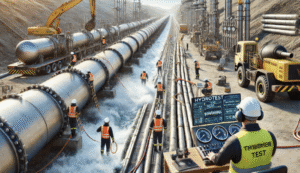
Hydrotest pipeline construction is an essential process in the development and maintenance of pipeline systems that transport liquids such as water, oil, and gas. Before a pipeline can go live, it must undergo rigorous testing to ensure its integrity, safety, and compliance with regulatory standards. This crucial procedure, known as hydrostatic testing, uses pressurized water to validate a pipeline’s structural soundness under conditions that exceed its normal operating pressures.
Whether you’re a stakeholder in the energy sector, a contractor working in infrastructure, or simply someone curious about how massive pipeline projects get approved for safe operation, understanding the hydrotest construction process is key. This article breaks down the step-by-step stages, safety measures, equipment used, and regulatory expectations in hydrotest pipeline construction.
What Is Hydrostatic Testing?
Hydrostatic testing (commonly referred to as hydrotesting) is the process of filling a pipeline with water and pressurizing it to check for leaks, structural weaknesses, or material defects. It’s a form of non-destructive testing (NDT) that helps verify the durability and reliability of the pipeline before it’s put into service.
Unlike air or gas, water is largely incompressible. This makes it a safer testing medium since it won’t expand explosively in the event of failure. Hydrotesting mimics real-world operating conditions and gives engineers valuable insight into a pipeline’s performance under stress.
For a deeper understanding of hydrotesting as a safety measure, you can explore guidance from PHMSA (Pipeline and Hazardous Materials Safety Administration) 🌐.
Pre-Construction Considerations 🚧
Before hydrotest construction begins, several factors must be addressed:
1. Pipeline Design Specifications
Engineers must calculate the pipeline’s maximum allowable operating pressure (MAOP), material yield strength, and determine the proper test pressure. Typically, the hydrotest pressure is set at 1.25 to 1.5 times the MAOP.
2. Regulatory Compliance
Compliance with local, national, and international standards is crucial. In the U.S., this includes requirements from the American Society of Mechanical Engineers (ASME) and DOT regulations.
3. Environmental Impact Studies
Water sourcing, waste disposal, and the potential for soil contamination must be assessed and permitted through agencies such as the EPA to protect surrounding ecosystems 🌱.
Step-by-Step Process of Hydrotest Pipeline Construction 🛠️
Step 1: Pipeline Fabrication and Installation
Before testing, the pipeline is constructed using welding or mechanical joining techniques. Welding undergoes X-ray or ultrasonic inspection to detect flaws. Once complete, the pipeline is buried or laid in place, following precise engineering blueprints.
Step 2: Pipeline Cleaning
Any debris, welding residue, or foreign material must be removed using pipeline pigs (devices that travel inside the pipe). These cleaning pigs ensure a smooth and clean interior surface, which is critical for an accurate hydrotest.
Step 3: Water Sourcing and Filling
Water is typically sourced from nearby rivers, lakes, or water trucks. It must be filtered to remove particulates that could skew the test results. The pipeline is then slowly filled to prevent water hammer or pressure spikes.
Step 4: Pressurization
A high-pressure pump is used to raise the internal water pressure to the designated test level—usually 125% of MAOP. Pressure gauges are installed at multiple points to monitor consistency throughout the line.
Step 5: Pressure Holding Period
The pressure is maintained for a predetermined period, often ranging from 4 to 24 hours. During this time, engineers check for pressure drops or visible leaks along the pipeline.
Step 6: Visual Inspection and Monitoring
Technicians walk or fly drones along the pipeline route to inspect for leaks. Leaks are often indicated by wet ground, pooling water, or decreased pressure on gauges.
Step 7: Draining and Drying
Once the test is successful, the water is safely drained and treated according to environmental standards. The pipeline is then dried using air pigs or vacuum systems to remove moisture.
Step 8: Documentation and Certification
All results are documented, including pressure readings, water volumes, duration, and test location. Certification is submitted to regulatory bodies and stakeholders.
Equipment Used in Hydrotest Pipeline Construction 🔧
-
High-Pressure Pumps: To pressurize water within the pipe
-
Pipeline Pigs: For cleaning and drying
-
Pressure Gauges and Sensors: For monitoring internal pressure
-
Water Tanks or Bladders: For storing test water
-
Check Valves and Relief Valves: For pressure control and safety
-
Data Loggers: To capture real-time data throughout the test
This specialized equipment must be calibrated and maintained per ANSI/ISA standards to ensure data accuracy 📊.
Challenges in Hydrotest Pipeline Projects ⚠️
1. Water Availability and Disposal
Sourcing large volumes of water in arid regions can be challenging. Likewise, disposing of test water in environmentally sensitive areas requires special permitting and treatment procedures.
2. Long Pipeline Routes
In lengthy pipelines, maintaining consistent pressure across miles of terrain is difficult. Segmental hydrotesting (dividing the pipeline into testable sections) is often employed to resolve this.
3. Cold Weather Testing
In colder climates, there’s a risk of water freezing in the pipeline during testing. Preheating water or using antifreeze solutions becomes necessary, but adds logistical complexity.
4. Land Access and Terrain
Remote or difficult terrain makes access for inspection and repair difficult. That’s why some projects use UAV drone technology for aerial monitoring during hydrotesting 🚁.
Benefits of Hydrotest Pipeline Construction ✅
-
Safety Assurance: Prevents failures that could lead to catastrophic environmental or human harm
-
Regulatory Approval: Required for legal operation of most high-pressure pipelines
-
Public Trust: Demonstrates due diligence and commitment to infrastructure integrity
-
Operational Readiness: Ensures that the pipeline is prepared for real-world performance
-
Leak Detection: Identifies defects before they become dangerous or expensive
Hydrotesting also helps meet the conditions of ISO 9001 Quality Management Systems, ensuring a reliable infrastructure backbone for energy and water networks.
Global Standards and Regulations 🌍
Hydrotesting must align with international safety and engineering protocols. Key standards include:
-
ASME B31.4/B31.8 – For liquid and gas transmission pipelines
-
API 1110 – For pressure testing pipelines
-
DOT 49 CFR Part 192 & 195 – U.S. federal pipeline safety regulations
-
CSA Z662 – Canadian pipeline design and testing standard
-
ISO 13623 – Global pipeline transportation system management
These standards protect human life, property, and the environment and are enforced by entities like NACE International and ANSI.
Environmental Stewardship and Hydrotesting 🌎
Environmental concerns surrounding hydrotest pipeline construction are significant. Improper water disposal or leaks during testing can harm ecosystems. To mitigate these risks:
-
Water is pre-treated before use and post-treated before discharge
-
Wildlife monitoring is conducted in sensitive areas
-
Secondary containment and erosion control methods are employed
-
Spill prevention plans are integrated into the hydrotest workflow
Projects that meet or exceed EPA Clean Water Act standards stand out as environmentally responsible and gain stronger public and governmental support 🌿.
The Role of Data and Automation in Modern Hydrotesting 📡
Technological advancements have revolutionized hydrotest pipeline construction. Real-time data acquisition systems allow engineers to monitor pressure fluctuations with precision. Some advanced testing units now feature:
-
Automated test sequencing
-
Cloud-based data logging
-
Remote test monitoring dashboards
-
Predictive failure analysis using AI
Companies embracing this tech-forward approach can streamline operations and increase safety margins. The future of hydrotesting is faster, smarter, and more environmentally accountable than ever.
Conclusion: Why Hydrotest Construction Matters 🏗️
Hydrotest pipeline construction isn’t just another box to check—it’s the cornerstone of safe, reliable, and compliant infrastructure. Every successful hydrotest represents a pipeline that’s ready to serve communities, transport vital resources, and withstand the test of time and pressure.
Whether for oil pipelines in Alaska, water mains in urban areas, or natural gas infrastructure in rural zones, hydrotesting ensures that what’s built underground won’t become tomorrow’s headline for disaster.
If you are involved in pipeline construction, maintenance, engineering, or policy, never underestimate the importance of hydrotest protocols. They protect people, preserve the planet, and empower progress—one pipeline at a time.
🔗 For further reading on standards and safety, visit: