
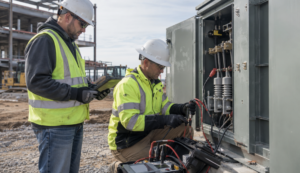
Electrical systems are a central part of modern construction, from temporary job-site power and commercial electrical installations to industrial equipment, utility infrastructure, and specialized machinery. In Lawton, Oklahoma, contractors and facility operators work in environments where electrical reliability can directly affect safety, productivity, and the life of expensive equipment. That makes preventative electrical testing an important consideration for construction companies, property owners, industrial facilities, and maintenance teams throughout Southwest Oklahoma.
Dielectric testing is one method used to evaluate whether electrical insulation can withstand the voltage stresses it may encounter during operation. The practice is especially relevant when equipment operates around elevated voltages or when insulation deterioration could expose workers or property to electrical hazards.
The importance of the issue reaches well beyond a single job site. The Occupational Safety and Health Administration’s electrical safety guidance recognizes electricity as a serious workplace hazard associated with shock, electrocution, fires, and explosions. For Oklahoma’s construction industry, thoughtful testing and preventative maintenance can therefore become an important part of a broader electrical safety strategy.
Dielectric Testing Provides an Important Look at Electrical Insulation
Electrical insulation is designed to keep current where it belongs. Over time, however, insulation can be affected by heat, moisture, contamination, age, vibration, physical damage, and repeated electrical stress. Problems may not always be obvious through a visual inspection alone.
A dielectric withstand test applies a specified test voltage to electrical equipment or components to determine whether the insulation can tolerate that stress without unacceptable current leakage or electrical breakdown. Wikipedia’s explanation of dielectric withstand testing notes that the process can be used on new equipment as well as equipment already in service as part of routine maintenance.
For contractors, industrial operators, electrical professionals, and facility managers, this provides another method of assessing the condition of electrical systems before an insulation problem becomes a larger operational or safety concern.
Businesses seeking professional Dielectric Testing Lawton services may use testing as part of an electrical maintenance, inspection, or safety program intended to identify insulation weaknesses and support reliable equipment operation.
Electrical Safety Remains a Major Construction Concern
Construction environments contain conditions that can make electrical safety particularly important. Temporary power systems, extension cords, portable equipment, changing work areas, exposed materials, heavy machinery, and ongoing installation work can all create circumstances in which electrical hazards must be carefully managed.
OSHA maintains extensive construction industry safety information covering the hazards employers and workers may encounter on job sites, including electrical hazards.
Dielectric testing does not replace proper installation, grounding, lockout procedures, inspections, personal protective equipment, employee training, or other required safety practices. Instead, it can serve as one part of a larger electrical reliability program.
Finding insulation weakness before equipment returns to normal operation may also help companies make better maintenance decisions. A controlled testing environment gives qualified professionals an opportunity to evaluate equipment without waiting for an unexpected failure to reveal a problem.
Lawton’s Construction and Industrial Environments Depend on Reliable Electrical Equipment
Lawton serves a diverse regional economy that includes construction, commercial development, public infrastructure, industrial activity, service businesses, institutional facilities, and military-related economic activity. Many of these environments rely extensively on electrical equipment that must function consistently.
Switchgear, electrical panels, insulated tools, cables, conductors, electrical components, utility equipment, and other systems can be exposed to demanding conditions. The specific testing requirements depend on the equipment, its application, applicable standards, manufacturer guidance, and the conditions in which the equipment is being used.
Oklahoma also maintains state oversight of licensed construction trades. The Oklahoma Construction Industries Board states that its mission includes protecting life and property through licensing and inspection of related trades for the health, safety, and welfare of the public.
That regulatory environment reinforces the broader principle that construction work involving electrical systems should be handled with careful attention to qualifications, codes, inspection requirements, and recognized safety practices.
Testing Can Reveal Problems Before They Lead to Equipment Failure
One of the practical advantages of preventative electrical testing is the opportunity to identify weaknesses while equipment is still functioning.
Insulation does not necessarily fail all at once. Environmental exposure and normal equipment use can contribute to gradual deterioration. Moisture intrusion may reduce insulation performance. Heat can accelerate aging. Dirt and contaminants can affect components. Mechanical movement can damage protective materials. Repeated electrical stresses can also influence the long-term condition of an electrical system.
When deterioration continues without detection, the consequences can include electrical faults, equipment outages, damage to connected systems, production interruptions, or worker exposure to dangerous electrical energy.
Scheduled testing can give maintenance teams more information for determining whether equipment should remain in service, receive further evaluation, undergo repairs, or be replaced.
The goal is not simply to perform a test and record a result. The larger objective is to make informed decisions about the condition and continued use of electrical equipment.
Oklahoma Places Specific Requirements on the Electrical Trade
Electrical work in Oklahoma is subject to licensing and regulatory requirements. The Oklahoma Construction Industries Board provides information specifically for the state’s electrical industry, including pathways for apprentices, journeymen, and electrical contractors. The agency also states that electrical apprentice continuing education includes subjects such as applicable codes, state electrical industry regulations, Construction Industries Board rules, and electrical safety.
This emphasis on training is significant because electrical work often requires decisions that cannot safely be based on appearance alone. Testing instruments, procedures, voltage levels, equipment specifications, and interpretation of results all require appropriate knowledge.
Dielectric testing in particular involves intentionally applying elevated test voltage under controlled conditions. Proper procedures, suitable equipment, established test parameters, and qualified personnel are therefore essential.
Construction companies and facility operators benefit when electrical testing is approached as professional technical work rather than merely another maintenance checklist item.
Preventative Testing Can Support Construction Productivity
Safety is the primary reason for taking electrical hazards seriously, but electrical reliability also has a significant operational dimension.
An unexpected equipment failure can interrupt construction activity, delay crews, affect subcontractors, disrupt a production schedule, and create unplanned repair costs. If the failed component is connected to specialized machinery or essential electrical infrastructure, the effects can spread beyond the original equipment.
Preventative testing offers an opportunity to address certain problems during planned maintenance instead of dealing with them after an unexpected event.
This distinction can be important on active construction sites where multiple trades depend upon one another. Electrical delays can affect work scheduled for other crews, particularly when temporary power, permanent electrical service, mechanical systems, or specialized equipment is involved.
A planned testing and maintenance strategy cannot eliminate every possible failure, but it can provide valuable information for managing electrical assets more deliberately.
Electrical Testing Supports Oklahoma’s Broader Construction Workforce
Construction remains an important part of Oklahoma’s economy. The U.S. Bureau of Labor Statistics maintains employment data for Oklahoma construction, including building construction, heavy and civil engineering construction, and specialty trade contractors.
Each segment depends upon safe and dependable infrastructure. Electrical systems power tools, lighting, machinery, controls, communications equipment, HVAC systems, pumps, and many other components necessary for modern construction and facility operation.
Protecting those systems supports more than equipment reliability. It can help contractors maintain schedules, protect employees, reduce disruptive failures, and preserve investments in machinery and infrastructure.
As electrical technology becomes increasingly embedded in buildings and industrial systems, specialized electrical inspection and testing are likely to remain important components of responsible maintenance.
Dielectric Testing Fits Into a Larger Electrical Safety Program
No single electrical test provides a complete picture of every potential hazard.
A well-managed electrical safety and maintenance program may incorporate visual inspections, insulation resistance measurements, dielectric testing, grounding evaluations, equipment-specific inspections, maintenance documentation, thermal inspections, and other procedures appropriate to the installation.
The exact approach varies by equipment and application. A commercial building does not necessarily have the same testing requirements as an industrial plant, utility environment, construction site, or specialized electrical operation.
What remains consistent is the value of finding problems before they become emergencies.
The Oklahoma Construction Industries Board maintains current construction industry rules and laws governing the trades under its authority, providing contractors and professionals with a resource for understanding state requirements.
Staying familiar with applicable regulations, equipment standards, safety guidance, and testing requirements helps construction professionals build a stronger culture of electrical safety.
Testing Documentation Can Strengthen Maintenance Planning
Testing can also provide information that becomes more useful over time.
Maintaining records of inspections and electrical testing allows facility managers and maintenance teams to compare equipment condition across service intervals. Historical records may help identify recurring concerns, equipment that requires closer attention, or components approaching the end of their dependable service life.
Documentation can also improve communication among contractors, electricians, facility managers, engineers, and maintenance professionals. Instead of relying entirely on informal observations, teams can refer to recorded testing information when planning service and maintenance.
For organizations responsible for numerous pieces of electrical equipment, this can make maintenance planning more systematic.
Records should always be maintained according to applicable company procedures, regulations, equipment requirements, and professional recommendations.
Lawton Construction Companies Benefit From a Preventative Safety Mindset
Electrical safety is strongest when hazards are addressed proactively rather than only after equipment fails.
For Lawton construction contractors and regional businesses, that means looking beyond immediate job completion. Equipment condition, employee safety, maintenance schedules, electrical inspections, regulatory responsibilities, and long-term reliability all deserve attention.
Preventative electrical testing provides one way to support that approach.
A piece of equipment that appears normal from the outside may still contain insulation deterioration that is not readily visible. Professional testing can provide additional information about whether electrical insulation is performing as expected under defined test conditions.
That knowledge allows construction companies and facility operators to make better-informed decisions instead of waiting for a failure to occur.
Conclusion
Dielectric testing occupies an important place within the larger field of electrical safety because it evaluates something that cannot always be judged through appearance alone: the ability of electrical insulation to withstand specified electrical stress.
For Lawton’s construction, commercial, and industrial communities, reliable electrical systems help protect workers while supporting productive job sites and dependable operations. Preventative testing can identify potential insulation concerns, improve maintenance planning, reduce the likelihood of unexpected equipment problems, and give qualified professionals more information when evaluating electrical assets.
Oklahoma contractors already operate within a construction environment where licensing, codes, inspections, training, and safety requirements play important roles. Adding appropriate electrical testing to preventative maintenance efforts strengthens that safety-centered approach.
As buildings, job sites, industrial operations, and infrastructure become increasingly dependent on sophisticated electrical systems, attention to insulation integrity and equipment condition will remain important. For Lawton Construction News, the message is clear: protecting electrical systems before problems develop is not simply a maintenance consideration. It is an important part of protecting people, property, equipment, and the continued progress of Oklahoma construction.