
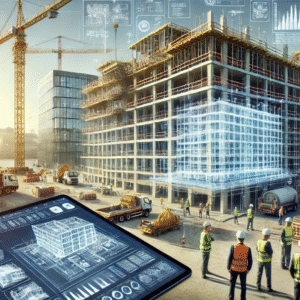
In the fast-changing world of construction, efficiency, accuracy, and collaboration are no longer optional—they’re survival tools. One of the biggest game changers has been Building Information Modeling (BIM). This powerful digital process doesn’t just create 3D models of buildings; it manages the entire lifecycle of a project, from design to demolition. But here’s the key question: when exactly does a construction company use BIM?
The answer isn’t as simple as saying “at the design stage” or “during construction.” The truth is, BIM can be deployed across multiple phases of a project, and when used strategically, it transforms how teams communicate, minimize risks, and maximize return on investment. Let’s break down the moments when construction companies lean on BIM the most.
Early Design and Visualization
One of the first opportunities construction companies have to use BIM is during the design stage. Architects, engineers, and contractors rely on BIM to turn 2D plans into fully interactive 3D models. This isn’t just about pretty visuals—it’s about clarity. Stakeholders can “see” the project before a single brick is laid.
Construction companies use BIM here to:
-
Detect clashes between systems (like HVAC and plumbing).
-
Provide clients with virtual walkthroughs.
-
Ensure all stakeholders have a unified vision.
According to Construction News, early adoption of BIM at this stage often prevents costly changes later in the build process.
Pre-Construction Planning
Once the design is set, the pre-construction phase is where BIM really proves its worth. Construction companies often turn to BIM to plan logistics, scheduling, and sequencing of tasks. Think of it as a digital rehearsal before the real build begins.
With BIM, companies can:
-
Map out site logistics like crane placement and material staging.
-
Run simulations to find the most efficient building sequence.
-
Create highly accurate cost estimates and resource allocations.
This ensures fewer surprises once crews are on-site, which can be the difference between a smooth project and one that spirals over budget.
During Construction: Coordination and Collaboration
During the actual build, BIM serves as the central hub of truth. Construction companies use it to keep everyone—from subcontractors to project managers—aligned. Field crews often access BIM models via tablets or AR headsets to ensure precision.
Key uses on-site include:
-
Real-time updates and issue tracking.
-
Ensuring all trades follow the latest model to avoid rework.
-
Verifying installations against digital plans for accuracy.
In fact, ENR has reported that many large contractors now require BIM as part of their daily coordination meetings, as it reduces rework and boosts efficiency.
Clash Detection and Risk Mitigation
One of the most talked-about advantages of BIM is clash detection. Construction companies deploy BIM tools to find conflicts between systems—say, a duct running into a beam—before anyone cuts metal or pours concrete. This reduces risk and prevents expensive, time-consuming fixes.
Beyond physical clashes, BIM also helps identify scheduling conflicts and safety risks. Companies use it to simulate construction processes and flag potential hazards. That’s why safety managers are increasingly advocating for BIM as part of risk management strategies.
Facility Management and Lifecycle Use
Construction companies don’t stop using BIM once the project is handed over. Owners and facility managers rely on the digital twin created by BIM to operate and maintain buildings for decades.
For construction companies, this means providing clients with a powerful tool for:
-
Tracking warranties, equipment specs, and maintenance schedules.
-
Planning renovations or expansions more effectively.
-
Managing sustainability and energy efficiency goals.
This long-term value often becomes a selling point for construction companies competing for major projects. The Construction Index highlights how BIM is being embraced as a lifecycle tool rather than just a construction aid.
Infrastructure and Public Projects
BIM isn’t just for high-rise buildings or commercial complexes. Construction companies use BIM extensively in infrastructure projects—bridges, highways, rail, and utilities. Governments around the world are increasingly mandating BIM on public-sector projects because it reduces waste, keeps costs predictable, and ensures accountability.
By using BIM, companies can:
-
Coordinate with multiple government agencies.
-
Model complex infrastructure environments.
-
Meet strict compliance and reporting requirements.
This is particularly critical in mega-projects where multiple contractors must collaborate seamlessly.
Sustainability and Green Building
As sustainability becomes central to construction, BIM helps companies model energy performance, simulate natural light, and calculate carbon footprints before construction even begins. Companies use BIM to experiment with materials and building methods digitally, reducing waste on-site.
BIM also supports certifications like LEED by providing accurate data for green building standards. Construction companies leveraging BIM in this way position themselves as leaders in sustainable construction—a competitive edge in today’s market. 🌍
When BIM is Essential
So, when does a construction company use BIM? The short answer: anytime precision, collaboration, and efficiency matter. But the more strategic answer is this: BIM is used most effectively when it’s integrated from the very beginning and carried through the entire project lifecycle.
From visualization to handover, BIM allows construction companies to:
-
Save money by reducing rework.
-
Deliver projects on time and within budget.
-
Enhance collaboration across multiple stakeholders.
-
Support long-term facility management and sustainability goals.
In today’s construction landscape, using BIM isn’t just an option—it’s becoming a necessity. Companies that don’t adopt it risk falling behind competitors who can deliver faster, smarter, and greener projects.
Conclusion
BIM near me is more than a buzzword—it’s a cornerstone of modern construction. Whether in design, pre-construction, or long-term facility management, construction companies use BIM to transform how they plan, build, and operate structures. It reduces risk, improves collaboration, and ensures every project is future-ready.
The construction industry is evolving fast, and BIM is at the center of that change. Forward-thinking companies are already using it as their secret weapon—and those that aren’t yet will soon discover they can’t compete without it. 🏗️✨
Leave a Reply