
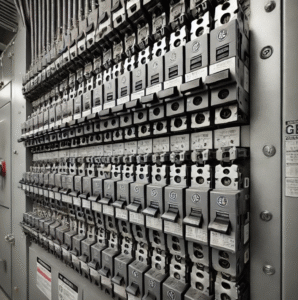
Construction moves fast. Money is on the line every single minute work is stopped. Crews have to power heavy equipment, temporary lighting, trailers, compressors, generators, lifts, welders, and saws, often in harsh outdoor and semi-permanent setups. The electrical load is intense, constantly changing, and rarely gentle. That’s why construction companies lean on reliable electrical protection hardware — and GE electrical breakers have become a go-to choice on job sites across the country. These breakers help crews stay safe, keep power running, and avoid expensive downtime or fines. They’ve become part of the backbone of how modern jobsites actually function day to day.
When a general contractor or electrical subcontractor sets up temporary power, they’re not improvising. They are protecting crews, protecting gear, and protecting the schedule. GE electrical breakers are trusted in that setup because they’re built to handle rugged environments, they follow recognized standards for interruption and protection, and they scale easily from a trailer panel to a large distribution center buildout. That reliability is worth real money for builders, especially in a time when tight project delivery is one of the biggest pressure points in the entire construction industry, as reported consistently in construction industry coverage from sources like Construction Dive.
Below are the core reasons construction companies continue to choose GE electrical breakers and keep them in circulation across temporary power setups, permanent installs, service upgrades, and retrofit work.
Safety on the job site is non-negotiable 🔧
Electrical safety is one area where no serious contractor cuts corners. A breaker’s first job is simple: interrupt dangerous current before it can hurt someone or destroy equipment. GE electrical breakers are designed to trip under overload or short circuit conditions, which prevents overheating, fire risk, and damage to downstream tools and wiring. That matters on construction sites because temporary panels, cords, and equipment get moved, dragged, and stressed in ways they’ll never experience in a finished building.
When a panel is feeding a scissor lift, fans for concrete curing, jobsite heaters, or multiple cutting stations, it’s easy for circuits to be pushed to the limit. Breakers that reliably trip at the correct rating protect electricians, laborers, and equipment operators from arc flashes or shock events. This is aligned with widely accepted electrical safety practices and standards described in resources like National Electrical Code, which construction crews follow to remain compliant with inspectors and safety officers.
GE electrical breakers are also known for consistent performance in harsh and unpredictable load conditions. On a live site, dust, moisture, and vibration are constant. Crews may plug and unplug large tools dozens of times a day. A breaker that doesn’t respond the same way every time is a liability. A breaker that does respond the same way every time is an asset. Safety on the jobsite is about predictability. GE gives predictable.
Reliable breakers protect schedule, and schedule protects profit 🏗️
In construction, lost time is lost money. If a temporary power panel fails or a breaker weakens and nuisance-trips all day long, that ripple hits the whole job. Crews stand around. Rentals sit idle while still billing. Concrete trucks miss timing. The GC starts breathing down the neck of the electrical subcontractor.
GE electrical breakers are chosen because they strike a balance between fast trip on dangerous current and stable performance under normal heavy load. That means fewer nuisance trips in the middle of critical work. When breakers are consistent, foremen can plan crews with confidence. They know how many saws, fans, lights, chargers, and drills they can safely run on a run of circuits, and that stability helps the superintendent hit daily production goals.
The construction industry is feeling intense pressure right now to deliver projects faster despite labor shortages and rising material costs, something widely documented in industry reporting such as ENR (Engineering News-Record). When margins are already squeezed, a power headache that burns even two hours of productivity is not just an annoyance. It’s an avoidable cost. Reliable breakers protect uptime, and uptime protects the budget.
Compatibility and standardization keep crews moving 🔌
Most job site electricians don’t want surprises. When they open a panel, they want to immediately understand the layout, identify the breaker types, match ratings, and make safe adjustments if needed. GE electrical breakers are common, which means they’re familiar. Crews already know how they mount, how they reset, how they label, and how they coordinate with panels. That saves time on site.
Standardization also matters for replacements. If a breaker is damaged or needs to be swapped, it’s easier to source a common, recognized brand than to special-order something obscure. Construction teams often pull from existing stock, from the shop, or from previous jobs. Using a widely available breaker line means faster, cleaner fixes and less downtime.
This matters on big commercial and industrial builds in particular. Those projects require organized power distribution for welding stations, lifts, lighting strings running multiple stories, pressure-testing pumps, and temporary HVAC. When every floor or trailer is using familiar hardware, troubleshooting gets faster. Less troubleshooting equals less rework. Less rework equals more profitability. That kind of “quiet efficiency” is one of the reasons construction project leads pay attention to supply chain and standardization trends covered by outlets like Construction Executive.
GE breakers support inspection, documentation, and liability control 📋
Inspectors care about more than whether the lights come on. They look at correct breaker sizing, correct labeling, correct panel loading, and whether the installed equipment is appropriate for the environment. If something goes wrong — fire, shock, injury, property damage — everyone will ask: Was the electrical protection appropriate and documented.
Using a trusted breaker brand helps with that story. GE electrical breakers are designed and rated to meet established electrical protection requirements under load, fault, and short circuit conditions. The basic function is recognized in electrical engineering and safety standards tied to circuit breakers in general, which are defined as automatically operated switches that protect an electrical circuit from damage caused by excess current from an overload or short circuit, as described in circuit breaker (Wikipedia).
That matters in the real world. If an incident occurs, a contractor wants to be able to point to established products, known ratings, and logged inspections. A foreman can say: the breaker was correctly sized, it was properly labeled on the panel schedule, it was reset or replaced according to manufacturer recommendations, and it was installed according to code. That paper trail protects the company. It also protects the GC and sometimes even the property owner.
Electrical issues are one of the top triggers for disputes, delays, and insurance claims on major projects. Nobody wants to eat that cost. When an electrical subcontractor can demonstrate that they used appropriate, code-aligned components with a long track record on commercial work, it lowers exposure.
Scalability from temporary power to permanent infrastructure ⚙️
Construction doesn’t happen in one neat phase. There’s site prep, foundation work, steel, framing, mechanical, rough-in, finish, punch list, and turnover. Power needs change at every one of those stages. Early on, you might just be running outdoor lighting, forms, pumps, and site trailers. Later on, you’re energizing elevators, air handlers, full lighting systems, and IT closets for commissioning. The scale and sensitivity of what’s being powered ramps up.
GE electrical breakers are used because they’re available in a range that supports that evolution. A company can stick with the same brand logic from day-one temporary panels to final distribution panels feeding permanent building systems. That continuity matters in turnover and closeout. It means there’s less guesswork in documentation at the end of the job when everything gets handed to the building owner’s facility team. It also makes it easier for maintenance teams after handoff, because the installed gear is recognizable and serviceable.
This clean chain from temporary to permanent is valuable in certain delivery models like design-build and CM-at-risk, where the contractor’s responsibility extends deeper into performance and warranty. Construction media and cost analysis coverage, including reporting from The Construction Index, continues to highlight how builders are being held responsible not just for erecting structures, but for delivering systems that work long-term. That includes electrical protection.
Ruggedness in punishing environments 🏞️
A construction site is not a nice place for electrical gear. There’s dust from cutting block and concrete. There’s vibration from running saws and hammer drills through load-bearing material. There’s dirt, water, and sometimes weather exposure. There’s the reality that panels get bumped by pallets, forklifts, and lifts.
GE electrical breakers are often chosen because they’re known to hold up under rough handling and keep performing as expected. When a breaker is built in a way that tolerates shock, vibration, and repeated resets without immediate failure, it saves everyone stress. No electrician wants to explain that half the slab crew went home because a temporary panel collapsed from minor abuse.
Ruggedness also ties into safety culture. A breaker that survives physical stress without cracking or loosening under vibration is less likely to become a hidden hazard. Hidden hazards are the dangerous ones. The cleaner the install and the more durable the breaker body, the easier it is to keep the jobsite safe and compliant with internal company policy as well as enforcement from OSHA and local inspectors. Jobsite safety culture and enforcement continue to be major storylines in construction reporting, especially as firms work to cut lost-time incidents and workers’ comp exposure while keeping productivity high, something highlighted often in Construction Business Owner.
Support for changing load demands as the build evolves 🏢
As the project scales up, so does the power draw. Early in the job, you might be dealing with scattered circuits running saws and temporary lights. By mid-construction, entire floors are active. You may be running heaters in cold weather to cure materials evenly. You may be powering test runs of HVAC systems. By the end, you’re simulating real building load.
GE electrical breakers give contractors a path to size circuits properly as new systems come online. Having access to a known catalog of breaker ratings helps site electricians match protection to expected demand without improvising or “borrowing” power from the wrong panel. Keeping load organized by breaker and panel reduces overload risk when late-stage subs (like low-voltage, elevator, IT, security, or fire alarm teams) start tapping into power to test their systems before handoff.
That organization is huge for avoiding last-minute electrical drama right before Certificate of Occupancy. Delays at that stage are punishing. The crew that can bring a building online clean, stable, documented, and within spec earns trust and repeat work.
Brand trust and continuity across projects 🧰
Construction is built on relationships. GCs remember which electricians quietly deliver working power every single day and which ones are chaos. Electrical subs remember which suppliers get them what they need when they’re under pressure. Everyone remembers which gear held up and which gear caused 3 hours of downtime.
GE electrical breakers show up again and again on specs, in temp panels, and in service trucks because electrical teams already understand them and trust them. That trust turns into habit, and in construction, habit turns into standard. When a brand becomes standard, it becomes repeatable, and repeatable is what keeps jobs on track across multiple sites, multiple clients, and multiple crews.
That kind of brand continuity matters in a market where labor is stretched. Newer apprentices and younger electricians can be trained faster when the equipment they’re working with is familiar, labeled clearly, and predictable. That drives consistency in installs and service across the entire company. Consistency is leverage. Consistency is scale. Consistency turns a crew into a system.
Conclusion: GE electrical breakers help construction teams protect people, protect power, and protect the schedule 🦺
Construction companies rely on GE electrical breakers because they create stability in an unstable environment. They protect workers from dangerous faults. They reduce nuisance trips and keep tools running. They meet expectations from inspectors and insurers. They’re familiar to the crews who have to live with them. They scale from the muddy first day of site work all the way to permanent power-up at turnover.
In an industry where safety, documentation, uptime, and schedule are the currency of survival, GE electrical breakers are one of those quiet parts of the jobsite that most people never notice — unless they fail. Crews stick with what keeps everyone working, keeps everyone safe, and keeps the project moving forward.