
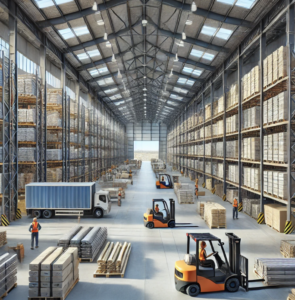
Construction rarely succeeds on hustle alone. Schedules, labor, equipment, permits, inspections, weather delays, and supply chain disruptions all collide on the same timeline. In that pressure cooker, warehousing companies become more than a place to store materials. They become a planning partner that helps construction companies control risk, keep crews productive, and protect budgets.
When a job site runs clean and organized, it usually is not an accident. It is the result of smart staging, dependable deliveries, and materials arriving in the right sequence. That is where the warehouse and the construction site start working like one operation.
Construction Schedules Depend on Staged Inventory and Reliable Flow 🚚
Construction schedules are built on sequencing. Concrete cannot pour before forms and rebar are ready. Drywall cannot hang before rough-ins pass inspection. Fixtures cannot install before finishes cure. A warehouse gives contractors a controlled environment to stage inventory so that the next phase is always supported, even when vendors ship early, late, or partially.
Instead of stacking sensitive materials on a muddy site and hoping nothing gets damaged, contractors can stage them off-site, then pull them in by floor, zone, or phase. This avoids clutter, reduces theft risk, and keeps crews focused on building rather than moving piles of materials around. When warehouse demand rises, it is often tied to the same forces shaping construction planning and industrial development, especially for logistics facilities and distribution growth. Warehouse demand trends coverage makes that connection clear.
Warehouses Protect Materials, Budgets, and Warranties 🔒
Construction materials are expensive, and many are fragile. Doors warp. Flooring scratches. HVAC equipment can be ruined by moisture. Electronics and controls are magnets for theft. A warehouse reduces exposure to weather, mishandling, and job-site traffic.
This is not just about replacing damaged product. It is about protecting warranty eligibility and avoiding the downtime that comes from reordering long-lead items. By storing materials in a controlled facility and releasing them only when the site is ready, contractors protect both quality and cash flow. That is one reason modern warehouse projects and logistics facilities continue to matter in the construction world, with ongoing coverage across major industry outlets like ENR’s warehouse projects page.
Just-in-Time Delivery Works Better with a Warehouse as the Buffer 🧱
Construction companies often aim for just-in-time delivery because job sites have limited space. The challenge is that “just in time” fails fast when shipping delays hit, when a vendor sends incomplete orders, or when inspections move the schedule by a week.
Warehousing companies act as the buffer that stabilizes the plan. Materials can arrive early to the warehouse, get checked and counted, and then be delivered in precise windows to match the superintendent’s schedule. That buffer reduces stoppages, keeps subcontractors from waiting, and prevents the domino effect of missed milestones.
This has become even more important as warehouse construction itself has evolved and demanded tighter coordination between design, delivery, and build teams, especially for high-performance logistics facilities. Construction Dive’s warehouse evolution coverage highlights how the complexity of these buildings raises the bar for coordination and execution.
Kitting and Sequencing Turn Deliveries Into Install-Ready Packages 🧰
A warehouse can do more than store pallets. Many warehousing partners provide kitting and sequencing, which means bundling materials into install-ready kits for specific crews, rooms, floors, or dates.
This approach reduces on-site handling and mistakes. It also makes labor more efficient. When an electrician receives a labeled kit for a specific area, time is not wasted hunting for parts or sorting boxes. The warehouse can also consolidate shipments from multiple vendors into a single delivery, cutting down on job-site traffic and reducing the chaos that slows crews down.
In large projects, that kind of precision becomes the difference between steady progress and constant rework.
Smarter Tracking and Documentation Reduce Disputes and Delays 📲
Materials tracking is not glamorous, but it saves real money. Missing deliveries create change orders, finger-pointing, and wasted hours. Warehousing companies often support the documentation process with receiving logs, inventory reports, chain-of-custody records, and proof-of-delivery discipline.
Construction industry coverage has noted the shift toward digital tracking for materials deliveries, which improves billing accuracy and reduces paperwork friction. ENR’s coverage on e-ticketing and materials tracking shows how the industry continues to modernize this part of the workflow.
When warehouse inventory and job-site consumption are connected through good tracking, contractors can forecast shortages sooner, reorder faster, and keep the schedule intact.
Warehousing Supports Prefabrication and Modular Strategies 🏗️➡️🏢
Prefabrication and modular construction depend on predictable logistics. Components need protected space before installation and must arrive in the correct sequence. Warehousing becomes the staging hub that supports off-site fabrication, quality checks, and coordinated delivery windows.
This is especially valuable in urban sites and active facilities where laydown space is limited. Warehousing also supports “night drop” strategies where materials are delivered during off-hours to reduce congestion and improve safety on the job site.
As the construction industry continues adapting to supply chain pressures, the concept of supply chain management stays central to how contractors plan procurement and delivery. Wikipedia’s overview of supply chain management provides a solid baseline for understanding why coordinated flow, storage, and timing matter.
Construction Sites Stay Safer and Cleaner with Off-Site Storage 🦺
Safety is directly tied to housekeeping. Crowded sites with materials stacked in pathways increase trip hazards, block access, and complicate emergency movement. Warehousing reduces clutter and keeps the job site aligned with safety standards and best practices.
It also reduces the number of trucks arriving unplanned. Fewer deliveries at random times means fewer conflicts with workers, equipment, and site access points. Controlled delivery windows create a calmer and safer environment.
This matters even more when major infrastructure projects reshape traffic patterns and logistics planning. Construction news coverage around large transportation projects often emphasizes logistics, staging, and long timelines. The Guardian’s reporting on the Lower Thames Crossing approval shows how scale and schedule turn logistics into a core success factor.
Warehouses Help Contractors Handle Long-Lead Items and Market Volatility 📈
Long-lead items are a defining challenge in modern construction. Switchgear, specialty glazing, custom millwork, mechanical equipment, and imported finishes can all create schedule risk. Warehousing allows contractors to receive these items when available, inspect them, store them securely, and release them when the site is ready.
That flexibility reduces the risk of being held hostage by a delivery date that does not match the build sequence. It also allows contractors to buy ahead when pricing is favorable or when availability is uncertain, without overcrowding the job site.
Reverse Logistics and Returns Keep Projects from Bleeding Time ♻️
Every project has wrong items, damaged shipments, overages, and packaging waste. Warehousing partners can support reverse logistics, including returns, exchanges, repackaging, and re-delivery. That saves time for site teams and keeps the project from stalling over small but frequent issues.
It also supports better closeout. Leftover materials can be consolidated, documented, returned where possible, or stored for warranty needs and future maintenance.
Conclusion ✅
Warehousing companies work closely with construction companies because building is not only a craft, it is a coordinated supply chain. Warehouses provide the staging, protection, sequencing, documentation, and delivery discipline that turn a messy flow of products into an orderly build plan. They help contractors keep sites safer, reduce material loss, improve labor efficiency, and absorb supply chain shocks without crushing the schedule.
When a project finishes strong, it is usually because the right partners handled the unseen work just as well as the visible work. Warehousing is one of those partnerships, and it continues to shape how modern construction succeeds. 🚀