
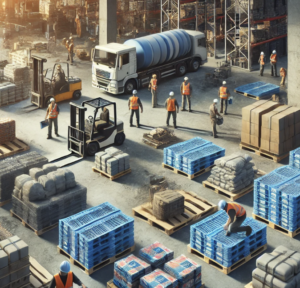
Construction has always been a “get it done” industry, but the way projects get built keeps evolving. Schedules are tighter, job sites are more regulated, material costs are unpredictable, and clients expect fewer delays and less waste. In that environment, logistics stops being a back-office detail and starts acting like a competitive advantage.
One of the simplest partnerships that strengthens job site logistics is working with a plastic pallet company. It sounds small until it touches everything: material protection, safety, cleanliness, staging speed, forklift efficiency, inventory control, and even how confidently a superintendent can plan daily work. When the pallet system improves, the whole workflow improves. 🔧
Better Material Protection Means Fewer Losses, Fewer Headaches 📦
Construction materials do not like moisture, grime, splinters, or unstable stacking. Wood pallets can absorb water, warp, crack, or shed nails and splinters. That risk shows up in real ways on a job: torn packaging, shifted loads, broken tile boxes, damaged bags of cementitious products, and messy staging areas that slow down crews.
Plastic pallets are built for repeat handling and harsh conditions. They resist moisture, rot, and many chemicals, and they keep their shape more consistently over time. That stability matters when loads are moved across uneven ground, staged outdoors, or stored in partially enclosed structures during early phases of a build. Even when a site is running smoothly, protection from preventable damage is one of the quickest ways to keep margins from leaking out of the project.
For a quick, neutral overview of pallet materials and plastic pallet characteristics, this reference is helpful: Pallet (Wikipedia)
Cleaner Sites, Cleaner Handling, Cleaner Inspections 🧼
A clean site is not about appearances. It is about productivity, safety, and passing inspections without drama. Plastic pallets are typically easier to clean than wood, and they do not shed debris the same way. That matters for interior finish phases, healthcare projects, food-adjacent builds, labs, and any job where dust and contamination control is taken seriously.
It also matters for general contractors managing multiple subs. When pallets break down, splinters spread, nails show up where they should not be, and cleanup time grows. Plastic pallets help reduce that background mess, and they support a more organized staging approach. That makes it easier to enforce housekeeping expectations across trades without constant friction. 🧹
Industry reporting continues to highlight how cost pressure and operational constraints are shaping construction activity, which makes “hidden efficiency” wins like site cleanliness and smoother handling more valuable: Materials costs, workforce gaps will shape 2025 activity (Construction Dive)
Safer Material Handling Reduces Jobsite Risk ⚠️
Pallets are handled constantly: unloaded, moved, staged, restacked, lifted, stored, and sometimes dragged around a site when the day gets busy. Every weak deck board, protruding nail, or partial collapse creates a safety risk. Safer handling is not only about fewer injuries; it is also about fewer slowdowns, fewer incident reports, and fewer days where crews lose momentum because something went wrong during routine movement.
Plastic pallets can reduce common wood-pallet hazards like splinters and exposed nails, and their consistency supports more predictable forklift and pallet jack handling. In practical terms, predictable handling means fewer “surprises” when a load is elevated or shifted. When a company runs multiple crews across multiple projects, fewer surprises is a measurable advantage. 👷♂️
Standardization Helps With Scheduling, Staging, and Crew Flow 🗂️
A plastic pallet partnership is not just buying pallets. The real value is standardization: consistent footprint sizes, consistent deck height, consistent weight, consistent stacking behavior, and a predictable number of units per load. That supports smoother material takeoffs, clearer staging plans, and more reliable short-interval scheduling.
It also supports prefabrication and kitting strategies. More contractors are leaning into off-site or near-site assembly and staged delivery to reduce congestion and labor waste. When materials arrive in consistent, stable unit loads, crews can move faster from “delivered” to “installed,” which protects the schedule during critical path phases.
Construction supply chain volatility remains a real factor for contractors trying to plan confidently, which makes strong logistics systems more important than ever: Navigating construction supply chain challenges in 2025 and beyond (PBC Today)
Durability and Reuse Can Lower Total Cost Over Time 💰
Wood pallets feel inexpensive until the full cost shows up in breakage, replacement, disposal, and the downstream effects of damaged materials and inefficiency. Plastic pallets often cost more upfront, but they are frequently purchased for long-life, high-reuse environments where lifecycle cost matters more than initial cost.
For construction companies that run steady volume—especially those doing repeat work like multifamily, light industrial, interiors, or ongoing facility upgrades—durability and reuse can reduce the constant churn of pallet replacement. Fewer replacements also means less time dealing with returns, disposal, and “pallet chaos” around the yard or laydown area.
Cost pressure in construction is not theoretical, and recent reporting continues to track rising input costs in ways that squeeze project margins, making operational savings more meaningful: Tariffs push construction input prices higher (Construction Dive)
Sustainability and Waste Reduction That Clients Actually Notice ♻️
Sustainability on a job site is often judged by visible outcomes: less waste, fewer damaged materials, fewer dumpsters filled with broken wood, and cleaner logistics practices. Plastic pallets can support those outcomes through reuse and longer service life, especially when paired with a pallet program that includes retrieval, pooling, or backhaul.
This is also where the partnership matters. A plastic pallet company can help set up systems: closed-loop programs, tracking, accountability, and standard handling rules that reduce shrinkage. Instead of pallets being a disposable nuisance, they become part of a circular materials-handling approach that aligns with modern client expectations and many project documentation requirements.
Broader construction economics coverage continues to track how costs, productivity, and market shifts shape decisions, which keeps sustainability and waste reduction tied to real operational performance: ENR Construction Economics (ENR)
More Reliable Logistics Supports Bigger, More Complex Work 🚧
As construction projects become larger and more logistically complex, small efficiencies stack up into large advantages. Infrastructure and major civil work, for example, depend on enormous material movement and strict scheduling. Even in vertical construction, large-scale builds run on predictable flows: materials arrive, get staged, and get installed with minimal downtime.
When logistics improve, a contractor can take on tighter schedules with more confidence, reduce congestion, and keep site operations calmer. That calm shows up in better coordination with subs and fewer rework-triggering mistakes caused by rushed staging or damaged materials.
Large public projects and major transport builds remain a visible reminder of how logistics and planning drive outcomes on complex work: Lower Thames Crossing plan approved by government (The Guardian)
Conclusion ✅
A construction company does not win on materials alone. It wins on execution: the ability to move materials efficiently, protect them from damage, keep crews productive, and maintain a safe, organized site that stays on schedule. Partnering with a plastic pallet company strengthens that execution in a practical, repeatable way.
Plastic pallets support better protection, cleaner handling, safer movement, stronger standardization, and a smarter long-term approach to waste and reuse. In a market where every project is pressured by cost volatility, labor constraints, and schedule expectations, that partnership is not a minor operational tweak. It is a quiet upgrade to the system that builds the building. 🏗️